Anyone can carry a blanket up a hill. The basket is where the afternoon is won or lost. On the Altopiano that means starting at a dairy counter, buying cheese cut that morning, and knowing which jar of honey belongs beside it. The bread, the shade, the walk back down — all of it follows from those first few choices.
What follows is a working method rather than a fixed menu: how to choose from the local dairy, honey and preserve shelves, how to pair what you buy, and how to get it to a meadow still worth eating.
Start at the dairy counter
Cheese is the backbone of the basket, so buy it first and build around it. Three pieces are enough for four people, and they should not be three of the same thing.
Ask for a fresh cheese, a medium-aged one, and an aged one. Asiago at its different ages does this job neatly: the fresco is milky and springy, the mezzano has enough salt and firmness to slice, and a stravecchio brings the crumble and the sharpness that sends people looking for honey. If there is a malga cheese from a summer pasture, take it. It will taste of whatever the herd walked through that week and it will be less predictable than the standard wheels. That unpredictability is the point.
Add ricotta if you want something to spread, and butter if you are bringing radishes or raw fennel. Buy to order rather than reaching for the pre-wrapped wedges, taste anything you are unsure of, and tell the person behind the counter what else is in the basket so they can steer you.
At home, unwrap the cheese and rewrap it in paper, not cling film. Take it out of the fridge half an hour before you eat. Cold mutes everything.
Two honeys, chosen for contrast
Two jars will do more for the basket than a whole shelf, provided they are different from each other. Take a pale one and a dark one.
Pale honeys — acacia, dandelion, the lighter millefiori — are mild and runny, and they let fresh cheese and ricotta stay the thing you notice. Dark honeys, chestnut above all, are bitter at the back and smell of undergrowth and warm wood. They stand up to a stravecchio; they flatten anything delicate. A jar of chestnut honey beside a young Asiago wastes both.
Use honey as a seasoning, not a dessert. A thread over ricotta with walnuts. A small pool on the board for dipping the crust of a hard cheese. A spoon stirred into thick yogurt if you are carrying any. Honey that has crystallised is not spoiled — stand the jar in warm water and it loosens.
At a market stall, ask which jars are from the most recent season. Ask, too, whether the honey was heated or simply run off the comb; it changes the aroma more than the label suggests.
Bread, and the jars that do the work
Bread
One loaf will feed a picnic and two more meals besides. Buy it the morning you leave, or the evening before at the latest, and ask for it unsliced — you want to cut it at the meadow, thick, with a crust that resists the knife. A country sourdough or a firm wholemeal carries cheese and oil better than a soft white loaf, which collapses under a slice of anything. Bring a second, smaller bread if there are children or if you want something to tear. Rye with chestnut honey and an aged cheese is the best three-ingredient thing in this article.
Preserves
Jars fill the gaps that bread and cheese leave. Aim for one oily, one acidic, one sweet. Mushrooms in oil, artichokes, sun-dried tomatoes, olives: the rich, savoury group. Giardiniera, pickled onions, cornichons, saor: acid, which cuts through fat and resets the palate between bites. Then mostarda — fruit set in a mustard syrup — or quince paste, or a firm jam. Mostarda with aged cheese is the pairing that converts people.
Decant at home into small lidded containers to save weight, keeping the oil or brine just covering the contents. Bring fewer jars than you think you need; two half-eaten ones make the walk home heavier than it should be.
Five rules for putting it together
- Weight with weight. Delicate with delicate: ricotta, acacia honey, a torn white loaf. Assertive with assertive: stravecchio, chestnut honey, rye. Mismatches taste flat rather than wrong.
- Acid resets. After three bites of cheese, something sharp — a cornichon, a pickled onion, a smear of mostarda — makes the next bite taste like the first.
- Sweet softens salt. Honey, jam, fruit paste. Use less than you want to.
- One loud thing per basket. If the chestnut honey is the loud thing, keep the cheese mild. If the cheese is a well-aged stravecchio, use plain bread.
- Texture counts as much as flavour. Something crisp, something soft, something that crumbles. Radishes and fennel are worth the space they take.
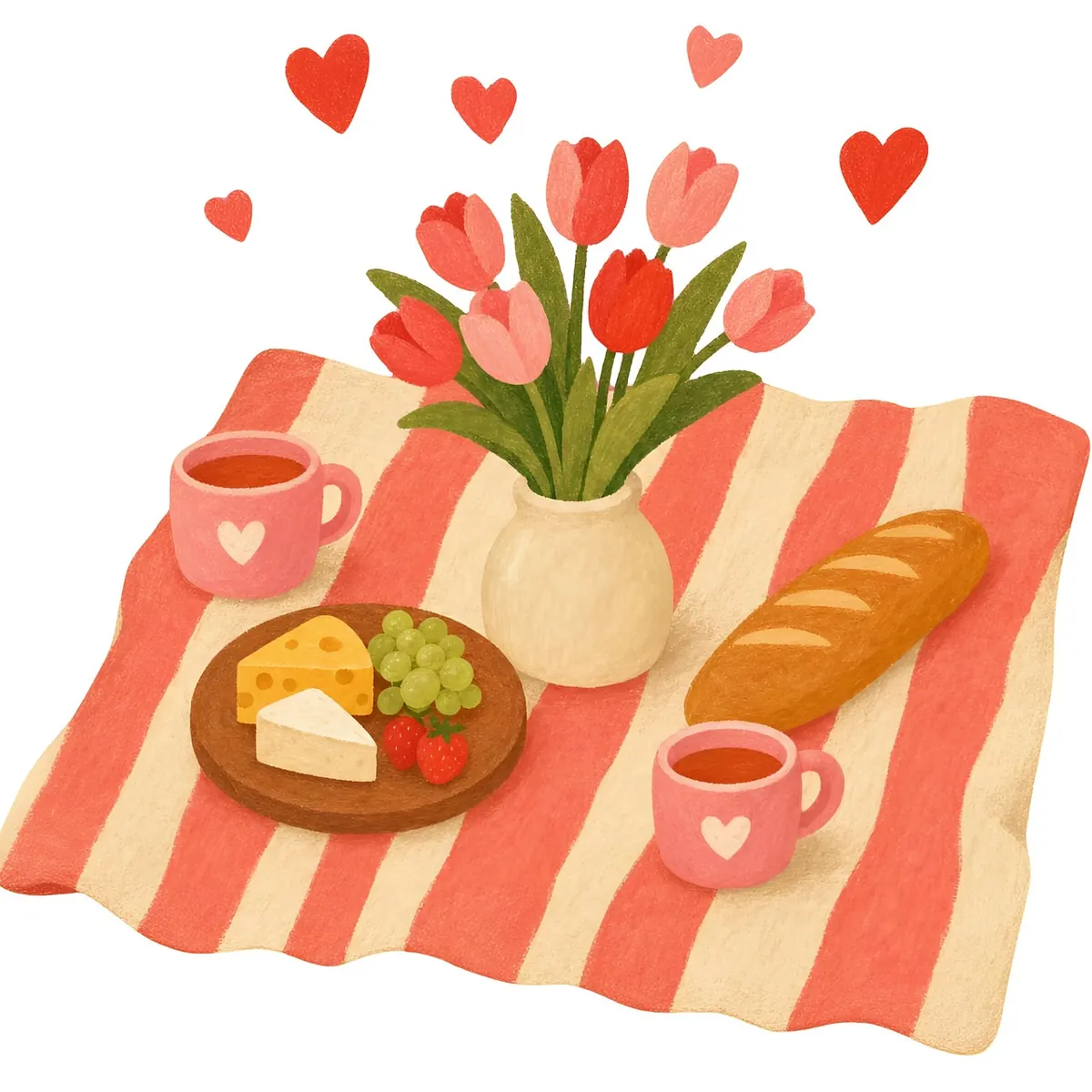
Lay everything out on one board and let people build their own combinations. Good pieces, side by side, in sensible proportions — that is the whole method.
Three baskets to copy
- The short walk. Young Asiago, ricotta, acacia honey, a white sourdough, radishes, walnuts. Light enough for an hour on a path and an early lunch.
- The long afternoon. Mezzano and stravecchio, chestnut honey, rye, mushrooms in oil, mostarda, a handful of dried figs. This one improves as it warms.
- The crowd. Focaccia, a mild cheese, millefiori honey, a firm jam, cherry tomatoes, cornichons, plenty of water. Nothing that needs a knife to serve.
Getting it there intact
Cold, shade and weight, in that order. A frozen bottle of water at the bottom of the bag does more than a thin ice pack, with the cheese in paper above it and the bread on top. If nothing is cold, eat the fresh cheese first and keep the aged one for later — a firm aged cheese tolerates a warm afternoon far better than ricotta does. Keep dairy out of direct sun. The light up here is stronger than the breeze suggests, and shade moves.
- A small board or a sheet of greaseproof paper
- One sharp knife and one small spoon
- A tin of salt flakes and a twist of pepper
- Cloth napkins, plus one damp cloth in a bag for hands
- A bag for rinds, crusts and empty jars — carry it out with you
- A stone or a spare bottle to weight the cloth when the wind picks up
Before you leave the house
Write a short list and buy to it; the basket fails through accumulation, not shortage. Buy the cheese and bread last so they spend the least time out of the cold, and wrap the cheese at the last minute. Read the labels on jars if anyone at the table has an allergy — mostarda contains mustard, and preserved goods often contain nuts or sulphites. If you are unsure whether a cheese is made from raw milk, ask the vendor, and if you are pregnant or immunocompromised, choose pasteurised cheeses and take advice from a health professional. Then buy slightly more bread than you need, find shade with a view, and eat slowly.
Photo: chachbrand / Pixabay