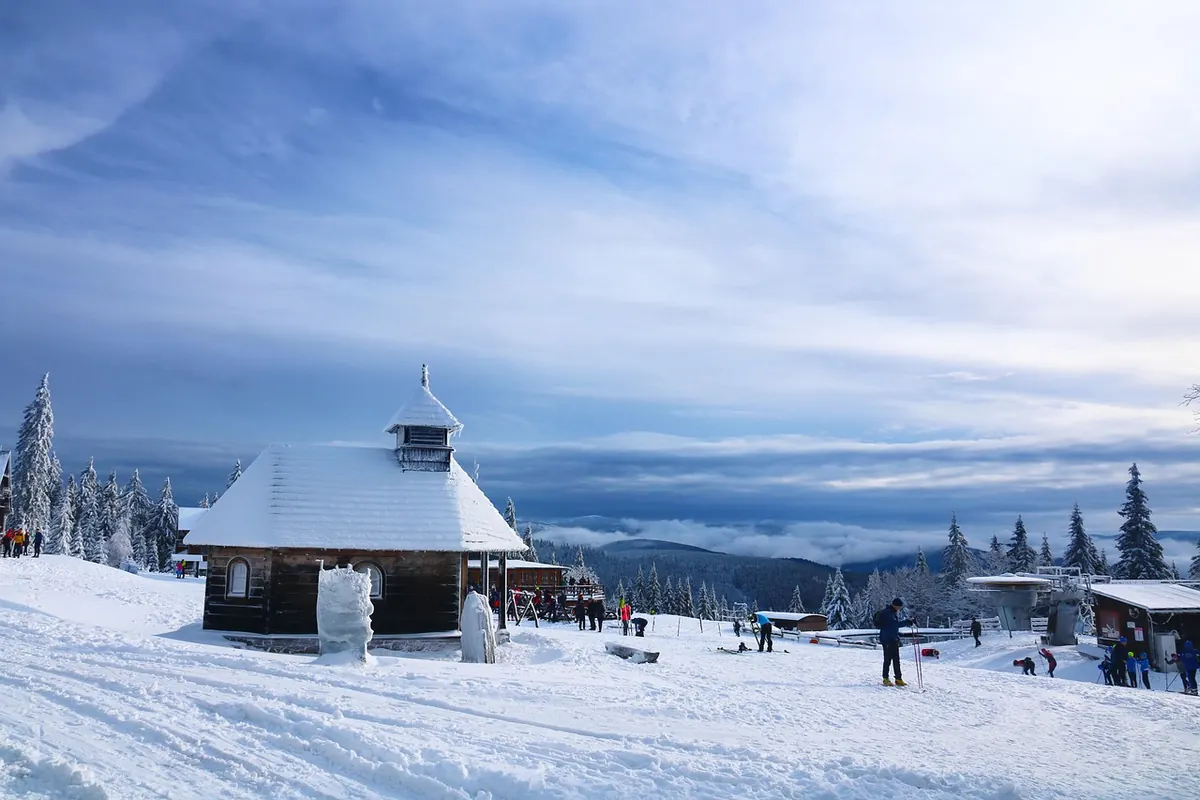
Winter on the Altipiano is not the season the summer photographs promise. The meadows sit under snow, the car parks are half empty, and the light arrives low and gold for a few hours in the middle of the day. Ask anyone who lives here and they will often tell you it is the best time to come. But the quiet has a price. Doors that stand wide open in August are shut, buses run to a different rhythm, and a stretch of road can close between breakfast and lunch.
None of that should put you off. It simply means you plan around what is actually running that week rather than around what you would like to see. What follows is a working checklist — the things worth confirming before you book a room, load the car, or promise anyone a plate of polenta at a particular hour.
First, look at the season inside the season
Winter here is not one block of time. The weeks between Christmas and Epiphany behave like high season: full tables, full car parks, and prices to match. Then January goes quiet — sometimes startlingly so — and a good number of family-run places take their own holiday right after the New Year, or in November before the snow settles. February brings the Italian school ski weeks, which fill up again in bursts, and March can be anything: bright sun on the south-facing slopes, wet snow in the village, mud on the lower trails.
So before you check a single opening time, ask which kind of week you are visiting. A Tuesday in mid-January and a Sunday in the middle of the ski holidays are different planets, and the same restaurant can keep entirely different hours in each.
Two calendars worth putting side by side
Check the regional school holiday calendar for the province, since that drives lift queues, bus timetables and table availability. Then check the local one: patron saint days, village festivals, the weekends when a parish or a pro loco runs something in the square. Small events close small roads and fill small dining rooms, and they are usually worth knowing about in advance — in both directions.
Restaurants and rifugi: make the call
Published opening hours are a starting point, not a promise. In winter, many kitchens switch to lunch only, open at weekends only, or close for two weeks without updating the website. Rifugi are their own category: some are reachable by car all winter, others only on foot or with snowshoes once the access track stops being cleared, and a few shut completely until spring. A mountain hut that serves three hundred covers in July may open for a handful of rooms and one sitting a day in January.
The fix is simple and old-fashioned. Ring them. Not the day before, ideally, but a couple of days ahead for a weekend, and a week ahead if you are a group or you want a table during a holiday period.
Four questions worth asking
- Are you open tonight, and until when? Ask for the last seating rather than the closing time — they are rarely the same.
- Can we reach you by car? If the answer involves "until the barrier" or "if the road is cleared", ask what that means in practice this week.
- Do we need to book? In a quiet week, no. During a ski holiday, always.
- Are you closing for a break soon? Owners often know weeks in advance and are happy to say so.
Transport: fewer runs, more variables
Bus services on the plateau thin out outside the school term, and some summer lines simply stop. Ski shuttle services usually run only when the lifts are running, which is not the same as when the snow is good. Connections up from the valley by train and bus can leave you with a two-hour wait in a place with one bar, so read the winter timetable, not the one you remember from a summer visit — and check the date it applies from.
If you are driving, arrive prepared for mountain rules. In Italy, winter tyres or snow chains are required on many mountain roads for a set period each year, and roadside signs tell you where. Conditions change fast: a road that is black asphalt at ten in the morning can be white and unsalted by three. Fuel stations outside the main towns often keep reduced hours or switch to self-service only in the evening, so fill up when you can rather than when you must. And check whether the car park you are aiming for gets ploughed — some small ones do not.
Weather closures: plan for them, don't forecast them
You will not out-guess the weather from a phone app, and you should not try. What you can do is build a plan B into every day before you leave the house. Wind closes lifts. Heavy snow closes side roads and sometimes the main ones. Thaw, rain and refreezing turn a pleasant path into a skating rink by mid-afternoon.
Before setting out, look at the local webcams, the road condition bulletins, and whatever the tourist office is posting that morning — they usually publish closures faster than anyone else. If you are heading anywhere off the marked trails, check the official avalanche bulletin for the day and take it seriously; that is a specialist decision, not a hunch. Daylight is the other constraint. Sunset comes early, and a walk that takes two hours in June can take three in boots and deep snow.
What stays open when the lifts stop
Attractions on the plateau follow the same logic as the restaurants. Indoor museums and small local collections often run weekend-only or reduced winter hours, and some close entirely after the first serious snowfall. Open-air heritage — the trenches, fortifications and memorials from the First World War that draw so many visitors in summer — generally remains accessible but unstaffed, snow-covered and slippery, so treat paths and metalwork with care and don't expect facilities.
What does run reliably is the quieter winter infrastructure: Nordic ski centres when snow allows, ice rinks, snowshoe itineraries, and farm visits by arrangement. Churches stay open. Village bakeries open early. If you want to see a working dairy or buy cheese directly, ask about a visit rather than turning up — winter is a working season for the farms, not a visitor season.
The 48-hour routine before you go
- Check the tourist office page and the road bulletins for your arrival day, then again on the morning you travel.
- Confirm two restaurants — one for the evening you arrive, one as a backup — and note their closing days.
- Read the winter bus timetable and confirm the last return service, not the last one you assume exists.
- Check your tyres or chains, add a scraper, a blanket and a shovel to the boot, and fill the tank in the valley.
- Download offline maps; mobile coverage is patchy on the passes and in the woods.
- Ask your accommodation what is open nearby that week. Landlords and hosts know more than any listing.
Let the closed door be part of the trip
Off-season travel on the Altipiano rewards a slightly different temperament. You will find places shut. You may eat your best meal of the trip in a half-empty dining room because everyone else stayed home. Build slack into the day: one confirmed plan, one alternative, and enough time to sit somewhere warm when the weather turns. Ring ahead, check the road, and keep a little of the day unplanned. The plateau in winter gives its best to people who arrive curious and unhurried — and who are not upset when the answer to "are you open?" is a friendly no.
Photo: katerinavulcova / Pixabay