Summer on the Altipiano has its own rhythm. The first sign is rarely a poster. It is a band rehearsing in a garage, a cluster of flowers left at a chapel door, or a handwritten notice in the baker’s window. By the time the banners go up, everyone seems to know where to stand. Visitors can enjoy these events enormously, but they are not staged for an audience. They are living customs, held by people who have done them since childhood. This guide is for anyone who wants to watch with care, understand a little more, and take part without turning a local tradition into a photo opportunity.
What Counts as a Folk Tradition Here
On the Altipiano, “folk tradition” is a wide tent. It can mean a solemn procession behind a parish banner, a band playing in the square after Mass, a table of homemade bread and cheese in a courtyard, or children in hand-stitched costume waiting for their turn to walk. Some customs are tied to the church calendar. Others follow the farming year, the opening of mountain paths, or the memory of a village’s patron saint. Many are organised by parish groups, alpine clubs, local bands, and families who have kept the details alive without writing them down.
That is why you will not find one neat list that covers the whole plateau. A hamlet may have a procession that a neighbouring village has never heard of. A custom that looks like a festival to an outsider may feel, to a resident, like a quiet act of belonging. The useful rule is simple: ask before you assume. The parish office, the local tourist office, or a Pro Loco can usually tell you what is public, what is religious, and what is meant for the community alone.
The Summer Procession Calendar
Summer processions tend to cluster around saints’ days, the feast of Corpus Domini, the Assumption in mid-August, and local patronal festivals. You may also come across mountain Masses, blessings of fields or animals, and small evening processions that begin after the heat has left the stone. Dates move with the liturgical calendar and with village custom, so check the current year’s programme rather than relying on last summer’s dates.
Do not assume the biggest poster is the main event. A large festival may be the social high point, while a smaller procession the next morning carries more meaning for residents. Read the programme for the start point, the route, and whether the event begins with Mass. If roads will close, arrive earlier than you think. In small centres, parking fills quickly and the most sensible option is often to leave the car at the edge of the village and walk in.
Procession Etiquette, Without the Guesswork
You do not need to know every local custom to behave well. Most of it comes down to paying attention. A procession is not a parade, and the people in it are not performers. They are praying, remembering, walking for a group they belong to, or keeping a promise. Your job as a visitor is to give them room.
- Arrive early and stand to the side. Keep the centre of the route clear, even when the procession is slow or paused.
- Dress for the setting. If you plan to enter a church, cover shoulders and knees. Comfortable shoes matter more than smart clothes on uneven streets.
- Switch your phone to silent. Avoid calls, loud videos, and flashing notifications during prayers, blessings, or bells.
- Do not cross the route. Wait for a gap and move behind the procession, never through it. Do not walk alongside unless you are invited.
- Be thoughtful with photographs. A wide shot from the side is usually fine. Ask before close-ups of children, older residents, or anyone in religious dress. Follow any clear signal that photos are not welcome.
- Keep children close near bands and animals. The noise can be sudden, and the procession may stop without warning.
- Do not touch statues, banners, vestments, or floats. These are not props, and the people carrying them need balance and focus.
- Follow the local cues. Stand when others stand, sit when they sit, and stay quiet when the mood changes. If you leave early, wait for a natural pause and slip away from the edge.
When in doubt, stand still, lower your voice, and follow the people who clearly know the route.
Customs You May Meet Along the Way
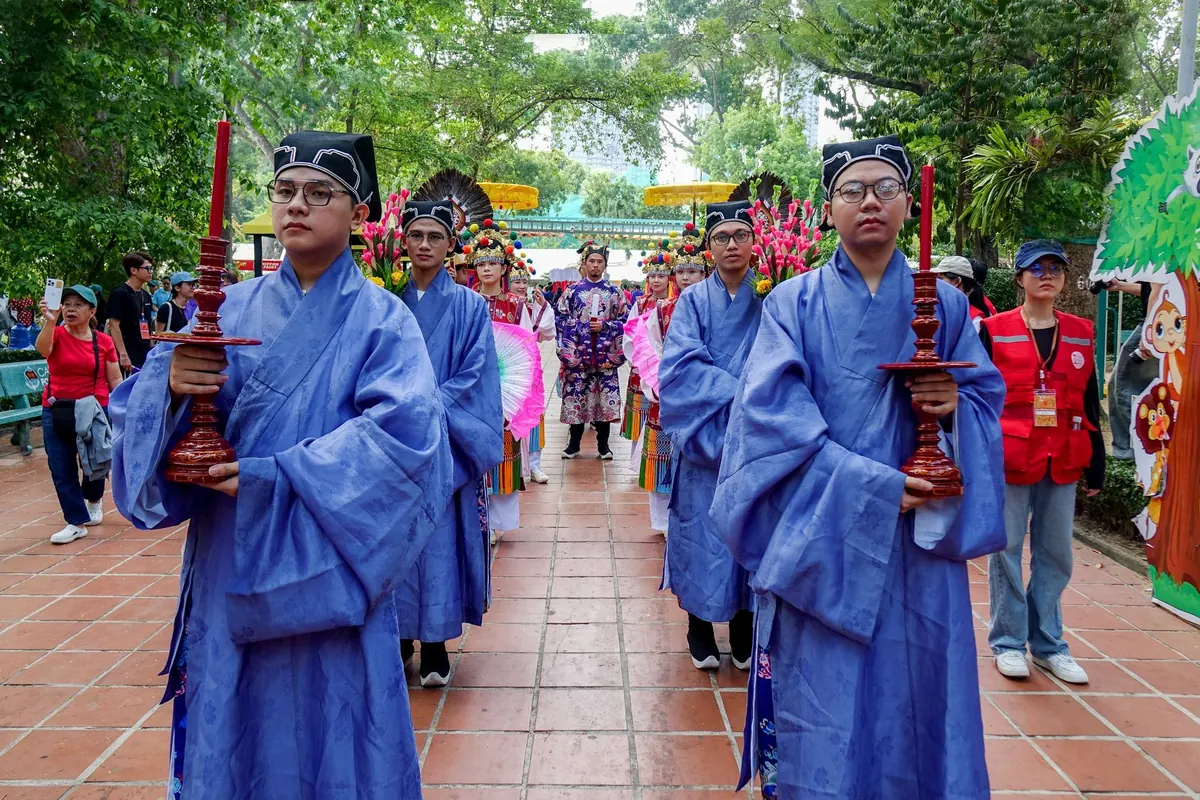
Depending on the village, you might see embroidered banners, members of a confraternity in their distinctive dress, a statue carried on shoulders, flower petals laid in the street, or a band leading the walk. Some processions include candles, incense, or the blessing of bread, herbs, and animals. Alpine horns may sound across a square; in another village, the only music may be a single bell and the shuffle of feet.
These details are not there to decorate a visitor’s afternoon. They mark rank, memory, neighbourhood, and faith. That is why it is better to watch first and ask questions later, ideally of someone who is not in the middle of a duty. A quiet “Posso chiedere?” — may I ask? — goes a long way if you speak a little Italian. If you do not, a smile and a gesture toward the event is usually enough.
After the Procession
The formal part often ends with food. Not a restaurant meal, but a table in a courtyard, a slice of cake, a glass of something local, and a great deal of standing around. If you are invited, accept if you can. If you cannot, thank your host warmly. Do not drift into private gardens or kitchens uninvited. And if you are offered a drink, remember that hospitality here is often generous but not endless: take what you will finish, and raise your glass when others do.
How to Join In Respectfully
The best way to take part is to be a good guest rather than a spectator. Buy from local stalls if there are any. Put something in the collection if one is passed, but do not make a show of it. Ask before photographing the front of someone’s house or a family group. If you are invited to carry a banner or help with a table, say yes only if you can stay until the end; leaving halfway can put others in an awkward spot.
Keep your voice low in church, even when the building is full of visitors. Do not prop open doors, move chairs, or stand on steps that are being used for the procession. If you have mobility concerns, ask organisers about the route, shade, and where you can wait comfortably. For personal health advice, especially about heat or exertion, speak to a health professional rather than relying on event-day guesswork.
Practical Closing: Before You Go
A little preparation makes the day calmer for everyone. Use this as a simple checklist.
- Check the current programme with the parish, tourist office, or Pro Loco; confirm the date, start time, and route.
- Plan to arrive 30 to 45 minutes early, and park outside the narrow centre if you can.
- Wear sturdy shoes, carry water and sun protection, and keep a light layer for the evening.
- Bring small notes for collections or stalls, and leave large bags at home.
- Learn one greeting and one thank-you in Italian; they will be used more than you expect.
- Keep your phone silent, your camera low, and your patience ready when timings slip.
Leave room for the unplanned part. A procession may take longer than the poster says. A neighbour may invite you to sit down. A band may play one more piece in the square. That is not a delay in the programme; it is the programme. Watch, listen, and let the village set the pace.
Photo: Vyvan BÙI VY VÂN / Pexels